When most shoppers compare diamonds, the first number they look at is carat weight. It’s the most recognized metric, but also the most misunderstood. Carat measures weight, not physical size.
That means two diamonds can both be 1.00 carat yet look completely different when viewed from the top.
This guide breaks down the truth using market data, price trends, and industry statistics, so you can make the right choice.

Understanding how different cuts distribute their weight is one of the smartest “cheat codes” when choosing a diamond—especially if you want the stone to look as big as possible without increasing your budget.
Let’s break down which cuts deliver the most face-up coverage and why.
Why Two Diamonds With the Same Carat Look Different in Size
Every diamond has three key dimensions:
- Table size (the top surface area)
- Diameter or length/width
- Depth percentage (how much weight is hidden in the bottom)
Some cuts are designed to push more weight outward, giving you a larger face-up appearance.
Others carry more weight deep inside the stone, making them look smaller even though the carat number is the same.
This is why choosing the right cut can visually upgrade your diamond—without paying for a higher carat.
Which Cuts Look the Biggest? (Ranked)
1. Marquise Cut – The Biggest Look Per Carat
Why it looks largest:
The marquise is long, narrow, and pointed at both ends. Its elongated shape maximizes surface area, making it the most efficient “weight-to-size” ratio.
Face-up advantage:
Looks 15–25% larger than a round diamond of the same carat.
Best for:
Clients wanting maximum finger coverage and a striking, elegant silhouette.
2. Oval Cut – The Most Popular Big-Look Choice
Why it looks big:
Smooth curves distribute weight evenly across the length, giving a longer and wider appearance.
Face-up advantage:
Looks 10–20% larger than round.
Best for:
Modern, minimalist styles that still want premium sparkle and a bigger appearance without harsh angles.
3. Pear Cut – A Hybrid of Elegance & Efficiency
Why it looks big:
One rounded end + one pointed tip = elongated illusion with balanced brightness.
Face-up advantage:
Looks 10–20% larger depending on proportions.
Best for:
A unique teardrop aesthetic with excellent finger lengthening.
Cuts That Appear Moderately Large
4. Emerald Cut
Why it looks big:
Wide, open table and long rectangular shape. It shows its full outline clearly, creating strong visual presence despite a calmer sparkle pattern.
Face-up advantage:
Looks 8–12% larger than round.
5. Radiant Cut
Why it looks big:
A hybrid of emerald outline + brilliant-style facets. Offers both strong coverage and intense sparkle.
Face-up advantage:
Looks 5–10% larger than round.
Cuts That Look Smaller Per Carat
These shapes carry more of their weight in depth, meaning less surface area is visible from the top.
6. Cushion Cut
Looks 8–15% smaller than round.
7. Princess Cut (Square)
Deep cut = smaller top view.
8. Asscher Cut
Often the smallest face-up appearance of all shapes.
Still beautiful—but not ideal if “largest look” is the goal.
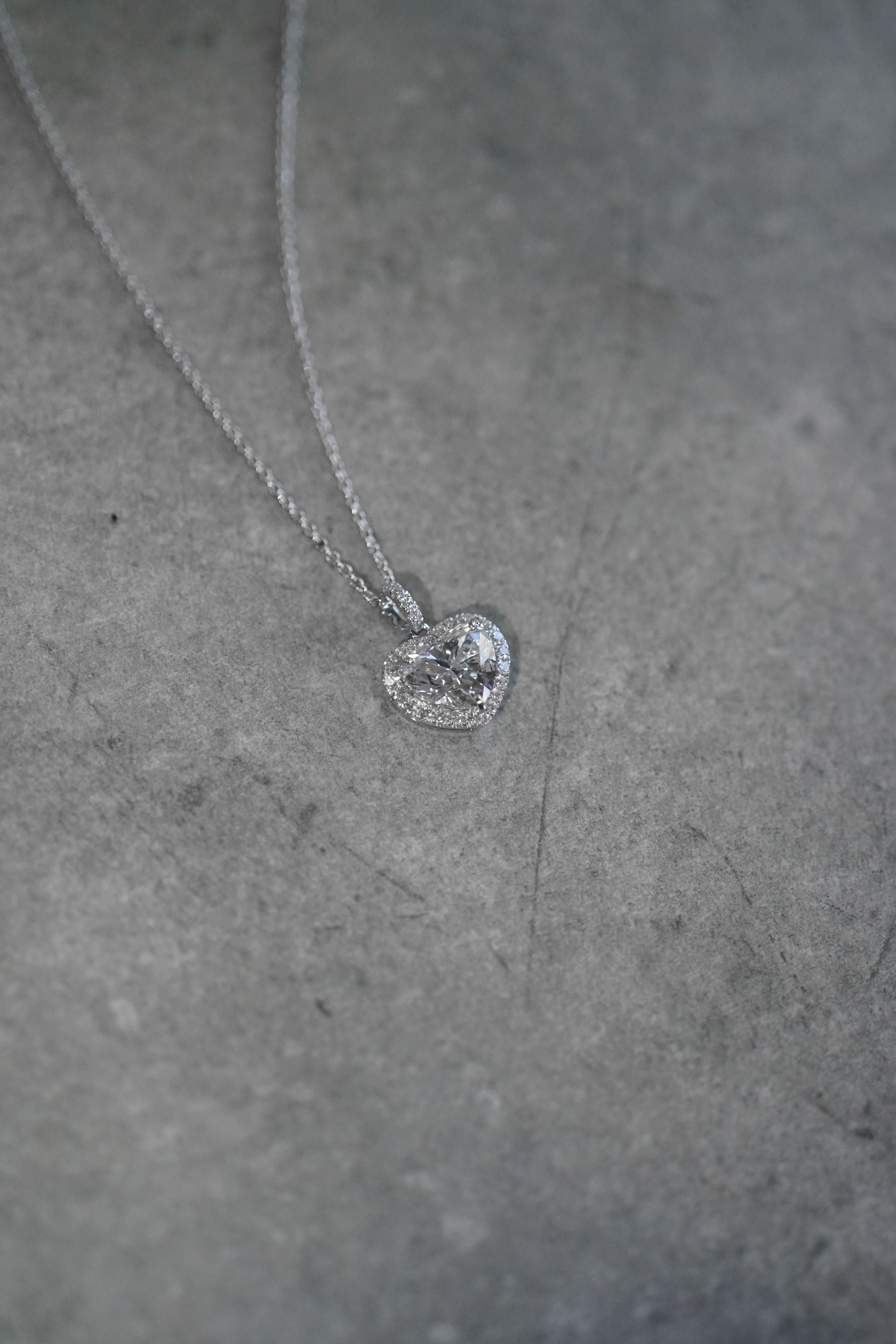
Where Does the Heart Shape Fit?
The Heart Shape is one of the most recognizable and romantic diamond cuts, but when it comes to visual size, it falls into the mid-range category.
Heart Cut
Why it looks the size it does:
Unlike elongated shapes, the heart is more compact, with weight distributed toward its center. The deep cleft (the “V” at the top) adds beauty but reduces face-up spread slightly.
Face-up appearance:
Generally looks similar to a round diamond of the same carat, sometimes slightly smaller depending on depth.
Ideal finger coverage:
Balanced—not too long, not too wide.
Best suited for buyers wanting symbolism and uniqueness over maximum spread.
Tip:
The heart cut requires larger sizes to show its shape clearly.
For visual impact, 1.00 ct+ is usually recommended.
The Cheat Code Summary: Biggest to Smallest (Same Carat)
Marquise → Oval → Pear → Emerald → Radiant → Round → Cushion → Princess → Asscher
How to Use This Knowledge When Buying
If your goal is to maximize the size your diamond appears:
- Choose marquise, oval, or pear
- Look for a shallower depth percentage (but not too shallow)
- Prioritize length-to-width ratio for elongated shapes
- Compare millimeter measurements, not just carat weight
The secret isn’t always buying a bigger diamond—
It’s choosing a cut that looks bigger without paying for extra carat.

